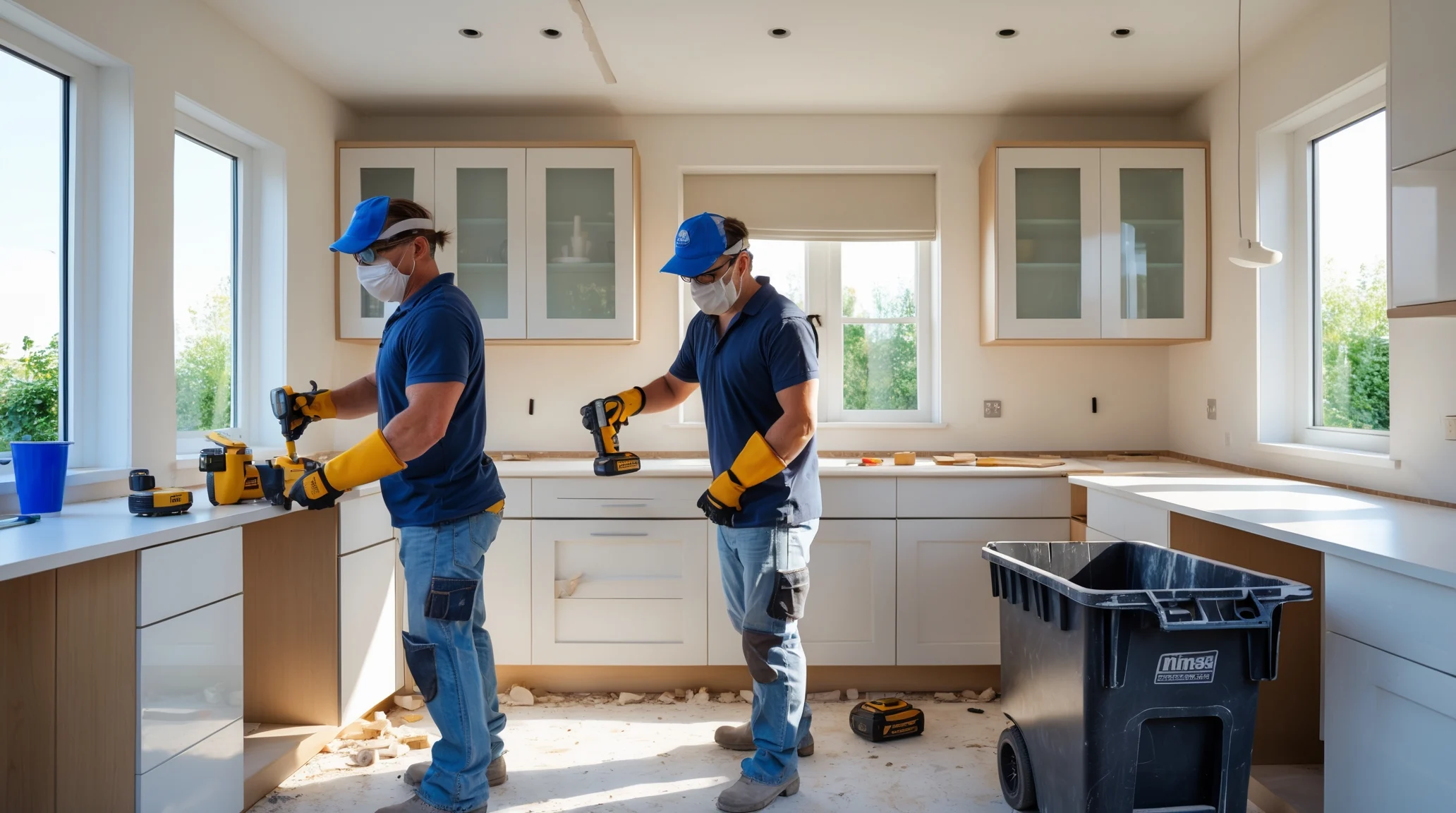
When you’re ready to begin kitchen demolition, safety should always come first. Always wear gloves, goggles, and a dust mask. Even simple tasks like removing nails can cause injury without proper protection.
Start by taking down upper cabinets. Use a screwdriver or drill to remove screws holding them to the wall. Have a helper support the cabinet as you remove the last screws so it doesn’t fall. Next, move to the countertops. Loosen any adhesive or screws, then gently lift the pieces off the base cabinets.
For flooring and drywall, use a utility knife to score seams before prying them off. This reduces unnecessary damage. Keep a heavy-duty trash bin nearby for smaller debris.
Efficient kitchen demolition work means staying organized labeling wires, sorting materials, and cleaning as you go. It may take a few extra minutes, but it keeps your workspace safe and your project on schedule.
Removing Kitchen Cabinets Without Damage
If your goal is to remove kitchen cabinets without ruining the walls or the cabinets themselves, the right technique makes all the difference. Begin by emptying the cabinets. Use a drill to unscrew hinges, handles, and brackets. Once the doors and hardware are removed, it’s time to take down the boxes.
Start from the top. Have someone hold the cabinet while you remove the final screws from the back or top frame. Be gentle when lowering each piece wood can crack if dropped.
If the cabinets are glued, use a flat pry bar to separate them slowly. Keep a towel or cloth behind the bar to prevent wall scratches. Label the pieces if you plan to reinstall or donate them later. This extra step helps preserve both the wall and the cabinet finish.
How to Dismantle or Disassemble Kitchen Cabinets the Right Way
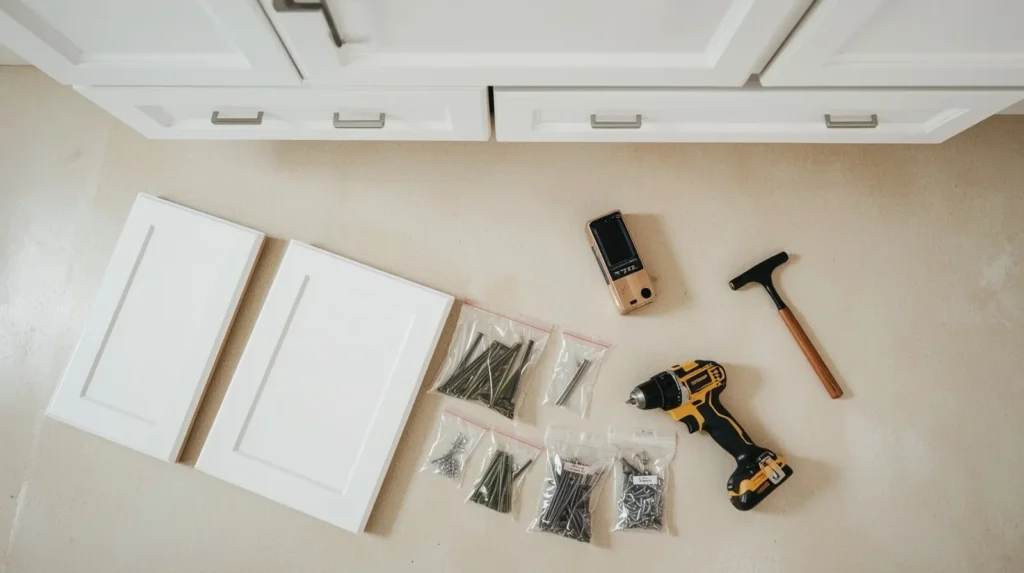
Many people confuse “dismantling” with “destroying,” but they’re not the same. To dismantle kitchen cabinets properly, work in a logical order doors, shelves, then frame. Take your time with each section.
For upper cabinets, use a cordless drill to remove mounting screws. For lower ones, loosen countertop attachments first. If you run into stubborn nails or brackets, use a small pry bar instead of brute force. This prevents cracks in drywall and damage to the cabinet structure.
If you plan to refinish or reuse your cabinets later, store the screws, brackets, and hinges in labeled bags. Keep everything together so you won’t lose parts during the rebuild.
Kitchen Strip Out and Countertop Removal Tips
A kitchen strip out involves more than just taking down cabinets. It’s a full removal of all kitchen components, including counters, sinks, flooring, and sometimes even drywall. Think of it as pressing reset on your kitchen.
To remove countertops, check for screws underneath the base cabinets. Loosen them carefully, then cut through any adhesive with a utility knife. Always lift from both ends to avoid cracking.
If you have tile backsplashes, use a chisel and hammer to pop tiles off one by one. Don’t rush this part; going too fast can damage the wall studs beneath.
After you finish stripping out, sweep and vacuum to remove leftover dust and debris. A clean workspace makes your renovation start smoother and safer.
Dealing with Plumbing and Electrical in a Demolition Kitchen
Plumbing and electrical lines are the trickiest parts of a demolition kitchen. Before doing anything, make sure all utilities are completely turned off. Water left in the pipes or live wires can lead to serious accidents.
If you’re unsure how to disconnect appliances or fixtures, call a professional. Licensed plumbers and electricians can cap off lines, remove junction boxes, and make sure everything is safe for the next stage.
When removing sinks or dishwashers, always have a bucket nearby to catch any remaining water. Label wires and pipes as you disconnect them so they’re easy to identify later. Safety is always the top priority in demolition work.
When to Hire Professionals for Kitchen Demolition
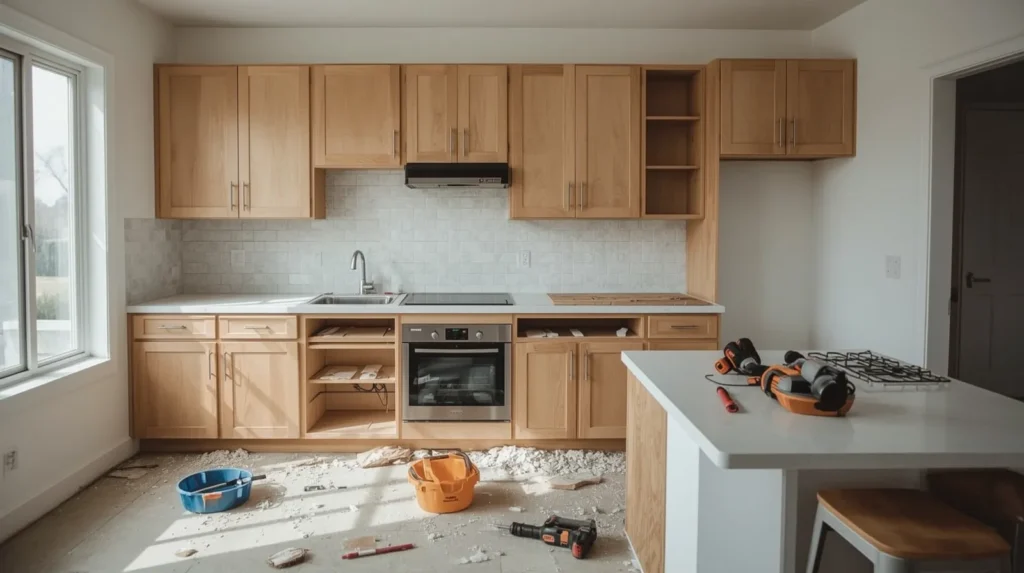
While many homeowners enjoy DIY projects, some demolition jobs are best left to professionals. If your kitchen has complex wiring, plumbing, or load-bearing walls, one mistake could cause expensive damage.
That’s where The Junk Thief comes in. Our experienced team handles demolition with precision and care, from removing heavy cabinets to hauling away debris. We make sure every part of the process is safe, clean, and code-compliant.
Hiring a professional team also saves you time. Instead of renting equipment, managing waste, or worrying about safety, you can focus on design and planning your new kitchen. Sometimes, expert help is not just convenient it’s essential.
Disposal and Recycling After Kitchen Demo in Northern Virginia
After demolition, piles of wood, tiles, and drywall can seem overwhelming. But with the right plan, cleanup doesn’t have to be stressful. In Northern Virginia, recycling and responsible disposal are strongly encouraged.
Sort your materials as you go wood, metal, and concrete should go in separate bins. Many local recycling centers accept building materials. You can also donate reusable items like cabinet doors or countertops to community centers or resale shops.
Professional services like The Junk Thief handle debris removal responsibly. We load, transport, and recycle materials whenever possible, keeping your project eco-friendly and compliant with local regulations.
Final Touches: Preparing for Your New Kitchen Build
Once demolition is done, you’ll have a blank canvas. Before starting your remodel, inspect the walls, floors, and framing. Look for hidden issues like moisture damage or weak spots. It’s easier to fix these now than after new cabinets are installed.
Next, measure and plan your layout again to ensure everything fits perfectly. If new plumbing or wiring is needed, schedule that before moving forward with construction.
A clean, well-prepared space makes your renovation faster and smoother. Demolition may seem messy, but when done right, it’s the foundation for everything beautiful that comes after.
Kitchen demolition is the first step in any major remodel. It’s not just about breaking down old materials it’s about doing it safely, efficiently, and with care. From removing cabinets to handling plumbing and recycling debris, every part plays a role in creating a fresh, ready-to-build space.
Whether you’re doing it yourself or calling in professionals, planning and safety come first. The junk thief brings real experience and care to every job, ensuring your kitchen transformation begins the right way.
Ready to clear out your old kitchen and make room for something new? Contact The junk thief today for a safe, professional kitchen demolition and cleanup service that saves you time, protects your home, and starts your renovation the right way.