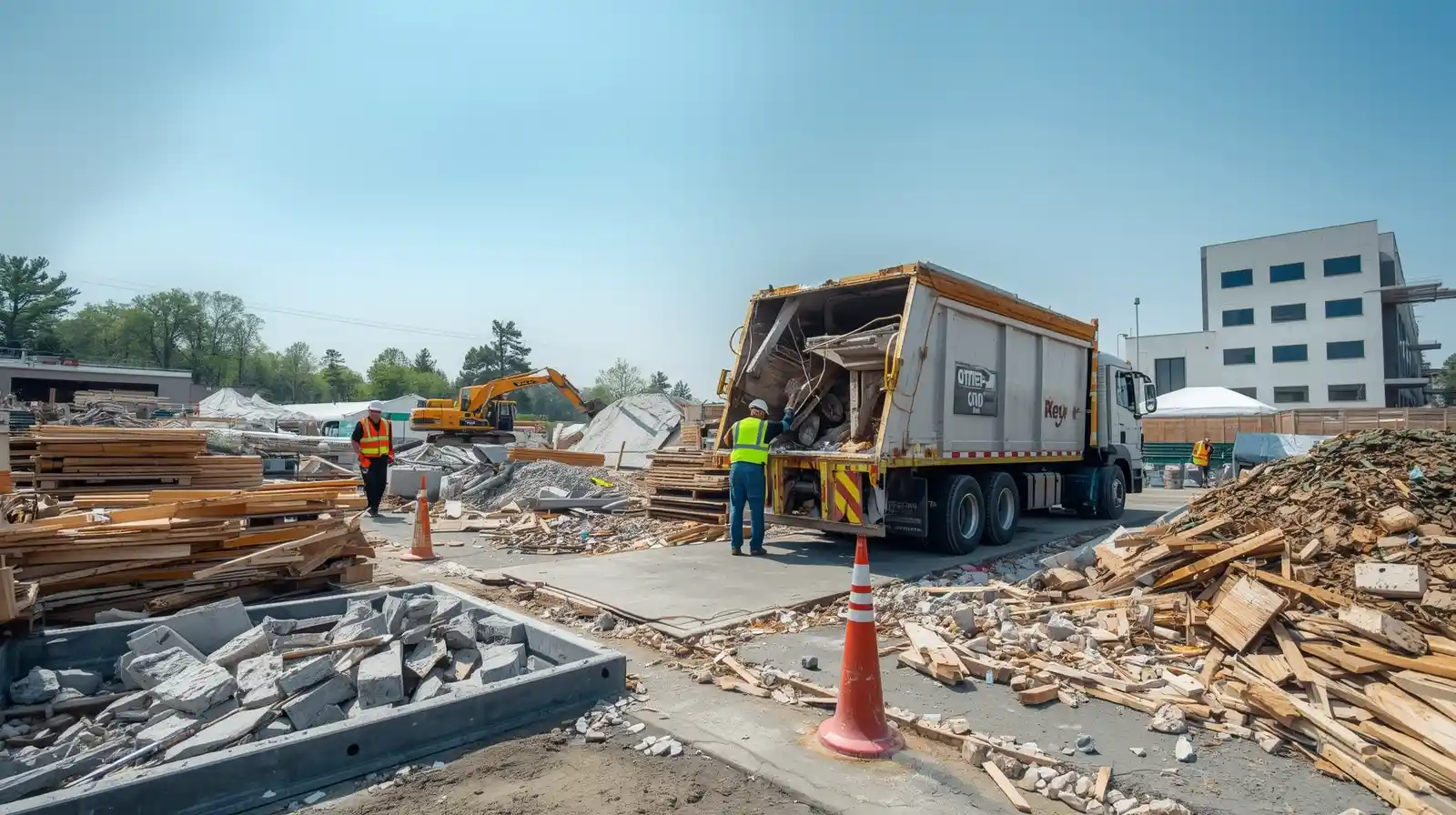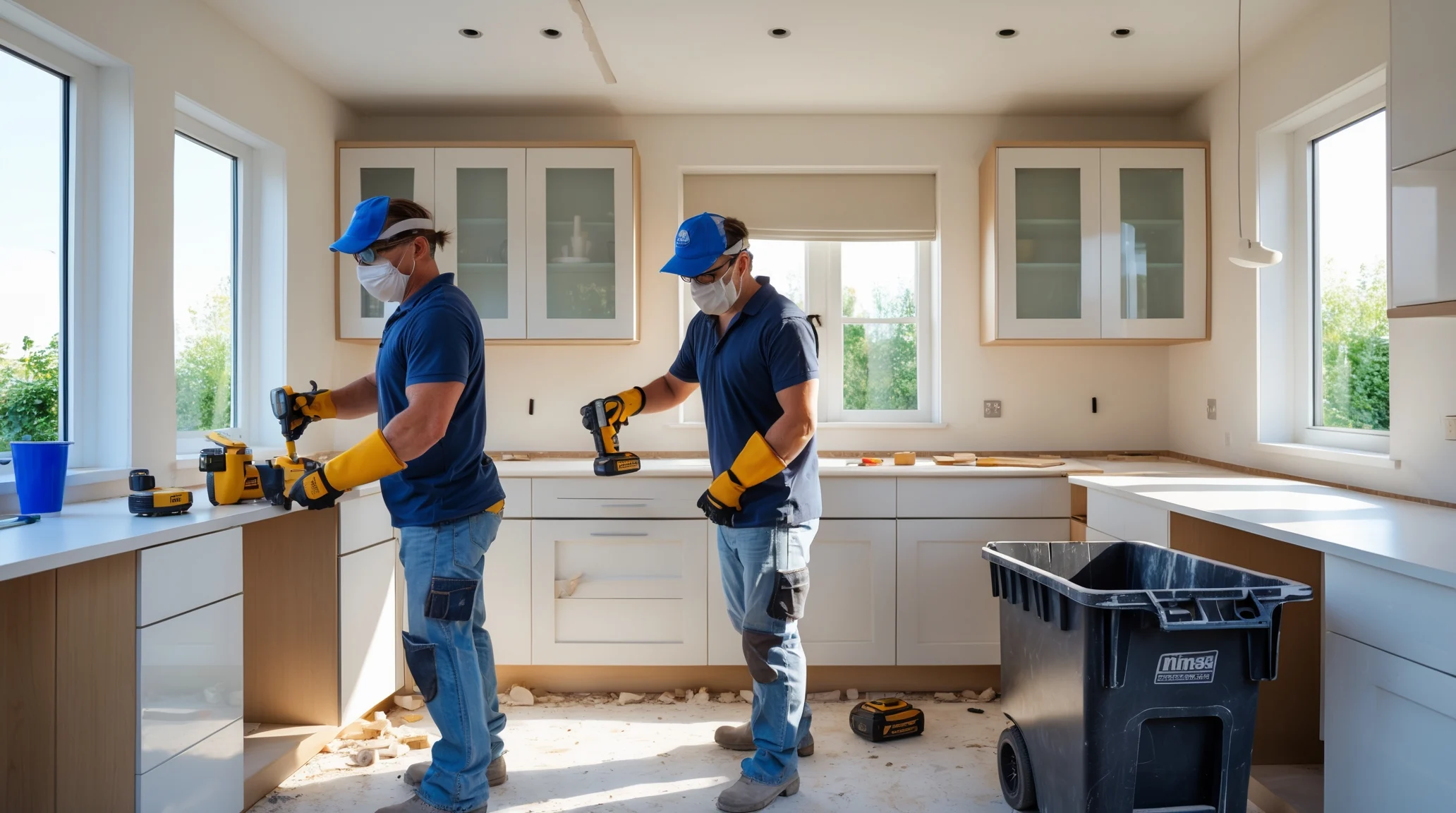
Construction debris removal is the process of clearing leftover materials from a building or renovation project. It includes picking up, hauling, and disposing of things like concrete, wood, metal, tiles, insulation, and other waste. The main goal is to keep the site clean, safe, and ready for the next phase of the project.
Many people are surprised by how fast debris builds up during a remodel or construction job. Even small tasks can leave piles of scrap materials, broken pieces, and loose trash. This happens because every cut, break, or change creates leftover pieces. Tiles crack, drywall crumbs fall to the floor, and wood scraps pile up by the hour. Without a clear cleanup plan, large stacks of waste can spread around the job site and slow everyone down.
Construction work involves heavy tools, loud machines, and lots of movement. As workers cut boards, remove old cabinets, or break down walls, debris is always falling, shifting, or piling up. Over time, this waste becomes harder to manage. You may think you will throw it away later, but the pile grows bigger every day. This is why many contractors and homeowners need help from a cleanup service. It keeps the work moving and makes the space safer for everyone.
What Counts as Construction Debris and Why Proper Disposal Matters
Construction debris includes anything that is left behind after building, repairing, or tearing down a structure. This can be wood boards, plaster, drywall, metal pipes, wiring, concrete chunks, roofing pieces, tile scraps, carpet padding, old fixtures, and more. Each of these items comes from different stages of the construction process, and they need proper disposal so they do not cause harm.
Some materials cannot go into regular trash bins. Items like concrete, bricks, large metal pieces, or heavy wood scraps need special handling. When people try to throw everything into one bin, the weight can damage the container or break safety rules. Proper construction material disposal keeps the environment safe and prevents injuries.
Certain materials can also be harmful. Dust from drywall or insulation can get into the air. Sharp metal pieces can cut workers. Concrete chunks can block walkways. When the site is full of waste, people trip, slip, or bump into dangerous objects. Safe disposal protects both workers and homeowners.
Another reason proper disposal matters is that many states have rules for how construction waste must be removed. They want to reduce pollution and encourage recycling. When you follow these rules, you help the community and protect the environment. This is why waste needs to be sorted, stored, and hauled properly.
The Role of Construction Debris Removal in Keeping Your Job Site Safe
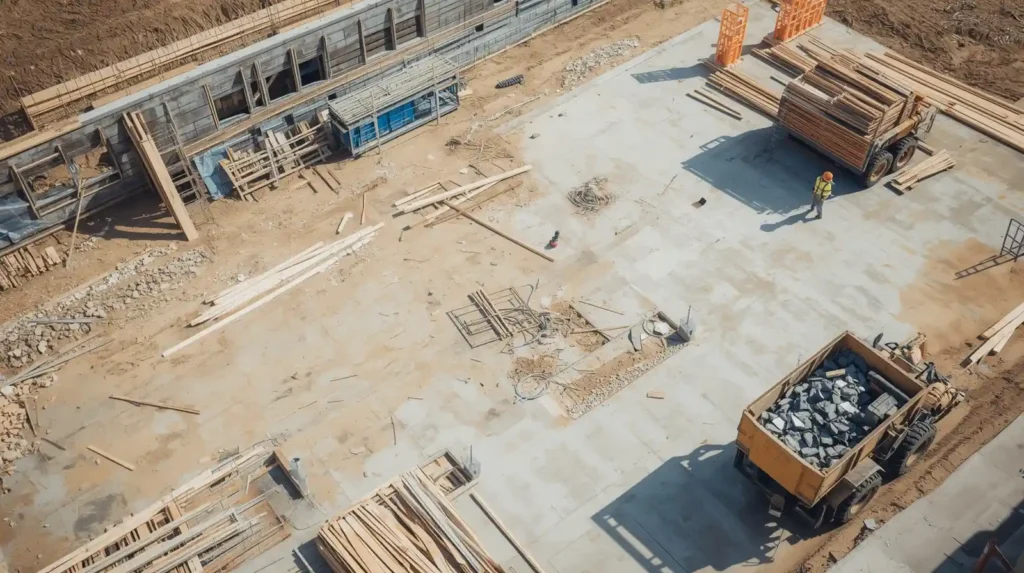
A clean site is a safe site. Construction debris removal helps workers and homeowners avoid accidents. When waste piles up, walking paths become blocked. Nails, screws, and sharp tools can hide under dust and other scraps. People can fall or injure themselves without noticing the danger.
A clean site helps workers focus. When trash is everywhere, tools get lost and materials become harder to find. Cleanup keeps everything organized and easy to reach. This saves time and money.
Good cleanup also helps prevent fires. Sawdust, broken wood, and old materials can become a fire risk if they are left near machines or electrical tools. Removing debris reduces those risks.
Construction debris removal also improves the overall workflow. Workers can move more freely. Machines have more space to operate. Every part of the project moves forward faster with less stress and fewer issues.
How Construction Material Disposal Works From Start to Finish
Construction material disposal follows a simple but important process. First, all waste is collected into piles or containers. Workers separate materials based on what they are and how they need to be handled. Concrete goes in one area, wood in another, metal in another, and general trash in its own section.
After sorting, the waste is placed in a construction trash dumpster or into bags or bins that can be safely moved. This step makes everything easier to lift and load. Heavy debris needs strong containers, and lighter waste fits well in smaller bins.
Once everything is sorted and stored, a hauling team picks up the waste. They lift, load, and transport the materials to disposal sites. This might be a landfill, a recycling center, or a special facility for certain materials.
Finally, the waste is processed. Wood may be chipped, concrete may be crushed, and metals may be melted down and recycled. This helps reduce overall waste in the environment and encourages safer, cleaner communities.
Common Types of Debris You’ll Find During Renovations and Repairs
Every construction project leaves behind different kinds of debris. Some of the most common materials include:
• Chunks of concrete and brick
• Broken tiles
• Wood scraps and trim pieces
• Metal pipes
• Old insulation
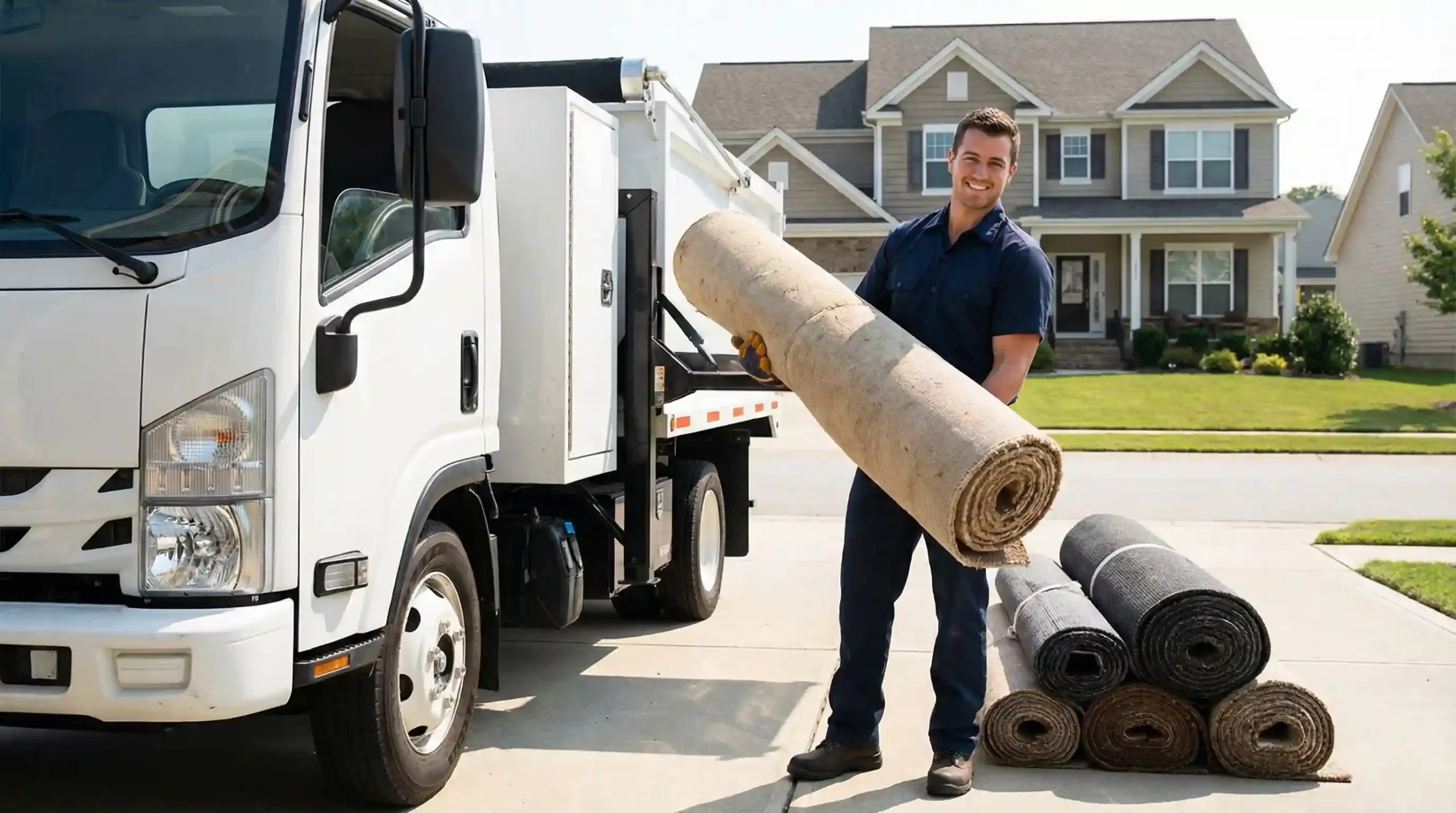
• Carpet and flooring scraps
• Drywall pieces
• Dust and packaging materials
During repairs, you may also find old fixtures, cracked sinks, worn out cabinets, or damaged panels. Even small repairs can create piles of leftovers. This is why most renovation projects need cleanup support. The debris can fill a room fast and becomes hard to manage.
Heavy debris is especially hard to lift. Concrete, tile, and brick pieces can weigh several pounds each. Lifting them without training or proper tools can cause injuries. This is why cleanup services bring strong equipment and large containers.
Why Choosing the Right Construction Trash Dumpster Changes Everything
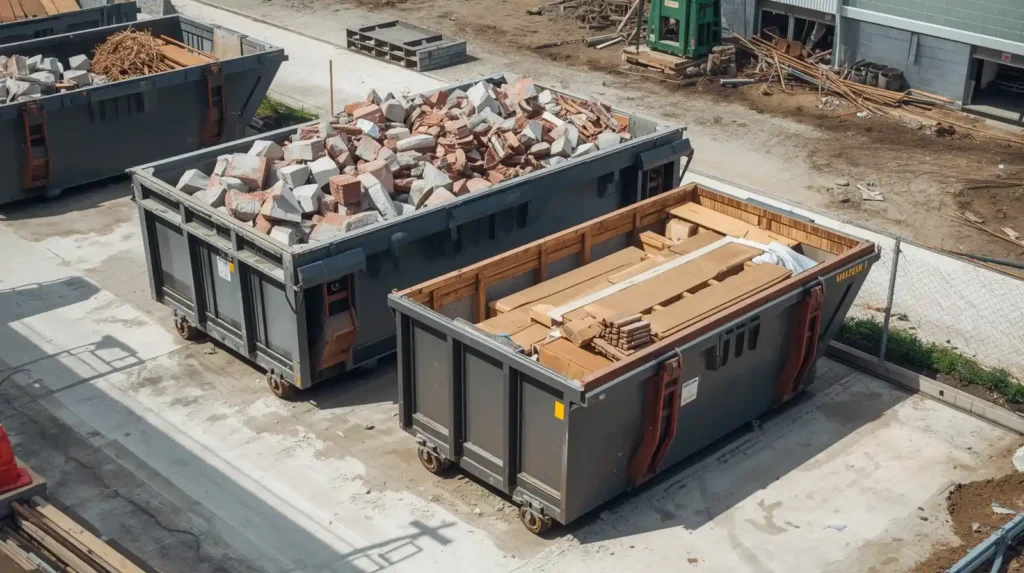
Choosing the right construction trash dumpster makes your cleanup faster, easier, and safer. Different dumpsters are made for different materials. Some handle heavy items like concrete or bricks. Others are better for general waste or small scraps.
A dumpster that is too small fills up quickly, which slows down the project. A dumpster that is too large may cost more than needed. When you choose the right size, your debris stays organized and out of your way.
Another reason dumpsters matter is weight limits. Heavy materials can break weak containers. A construction trash dumpster designed for heavy waste makes sure everything is secure. This keeps your team safe and avoids damage to your property.
If you are working on a big project, a roll off style option is often best. It can hold more debris and is easy to load. For smaller work, a mid sized container works well and fits in tighter spaces. The right choice depends on your project size and types of waste.
How Demolition Waste Recycling Helps Reduce Project Costs and Waste
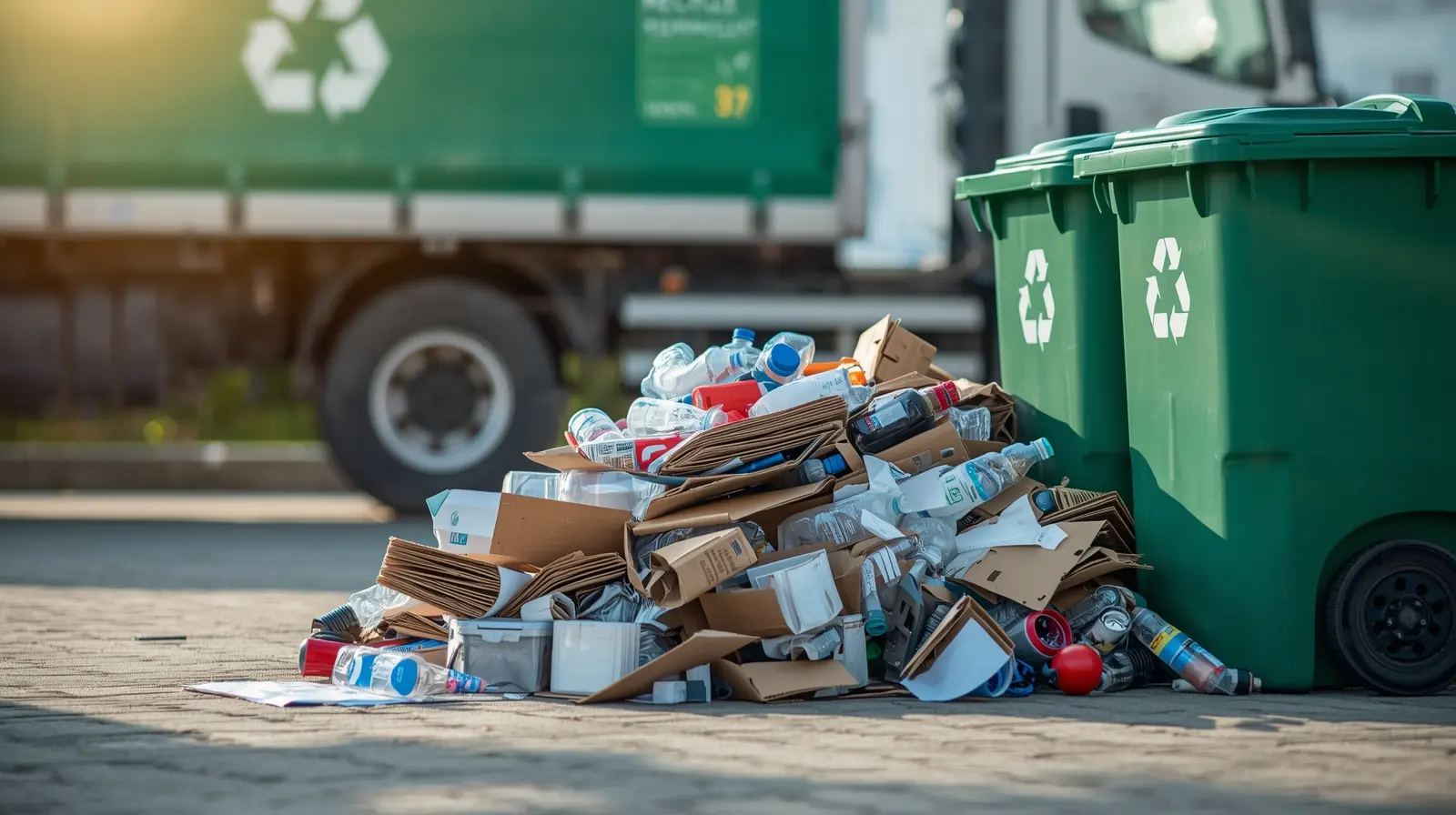
Demolition waste recycling is one of the best ways to reduce costs and protect the planet. When you recycle materials like metal, concrete, or wood, they can be turned into new products. This keeps them out of landfills and reduces the need to mine or create new materials.
Recycling also lowers disposal fees. Many recycling centers charge less to take materials that can be reused. This saves money over time, especially for large construction projects.
Another benefit is reduced pollution. Many building materials take a long time to break down. By recycling them, you reduce waste and help the environment. This keeps your community cleaner and healthier.
Recycling also follows many of the environmental laws that cities encourage. It shows responsibility and helps your project stay compliant with local guidelines.
When You Need Professional Help Instead of a DIY Cleanup
DIY cleanup sounds simple, but many homeowners and contractors find the task harder than expected. Heavy debris is difficult to lift, especially without the right equipment. Concrete, brick, and metal pieces can cause injuries if handled wrong.
Another challenge is sorting waste correctly. Different materials must be disposed of in different ways. Mixing them can lead to fines or safety hazards. Professionals understand how to handle each type of debris safely.
DIY cleanup also takes a lot of time. You have to load waste, drive to disposal sites, and unload everything. This can interrupt your project and delay your work. A professional team handles all of this for you.
You also avoid risks. Debris can hide nails, sharp edges, or toxic dust. Cleanup teams know how to handle these dangers safely and protect both people and property.
How The Junk Thief Handles Construction Debris Removal in Virginia
The Junk Thief follows a clear, safe, and organized process to handle construction debris in Virginia. The team starts by inspecting the project area. They check the amount of waste, types of materials, and locations where the debris sits. This helps them plan the right tools and container sizes.
The team sorts materials to keep heavy pieces separate from lighter waste. They load debris carefully to avoid damage to your property. Dust and small scraps are swept up to leave the space clean. Large pieces are lifted with proper equipment.
Recyclable items such as metal, clean wood, and concrete are taken to the right facilities. This reduces waste and helps protect the environment. Items that cannot be recycled are handled responsibly based on local rules.
The Junk Thief makes the entire process simple, safe, and stress free. Their goal is to remove waste fast so your project can move forward without delays.
Step by Step: What Happens When You Book a Cleanup Service
When you book a cleanup service, the process is simple. First, the team arrives on time and checks the site. They look at the debris pile and decide the best way to remove it. They explain the plan so you understand what will happen.
Next, the sorting begins. Workers separate materials based on type and weight. This keeps the process safe and organized.
After sorting, the team loads the debris into containers or dumpsters. Heavy pieces go in strong bins, while lighter debris goes into smaller ones. The goal is to keep everything balanced and safe to transport.
Once loaded, the team hauls the waste away. They drive it to proper disposal or recycling centers. When this step is complete, they return to check the area and remove any leftover dust or scraps.
By the end of the process, the space looks clean and ready for the next phase of your work.
How to Choose a Reliable Debris Removal Partner You Can Count On
Choosing a reliable partner makes your cleanup stress free. Look for a company with experience, good reviews, and a clear process. They should explain their pricing, timeline, and disposal methods. This helps you trust that the job will be done right.
Make sure the company handles different types of debris. Heavy items like concrete or bricks need special containers. A good company knows how to manage these safely.
Watch how they communicate. A good partner answers questions, gives clear instructions, and keeps you updated. This shows they care about your project and want to do a good job.
Finally, look for a team that values safety and follows local rules. Proper disposal protects your property and the environment.
A clean job site helps your project stay on track. If you want help removing waste fast and safely, reach out today. The team will guide you, give you friendly support, and make cleanup simple.